 Soyeb Akhtar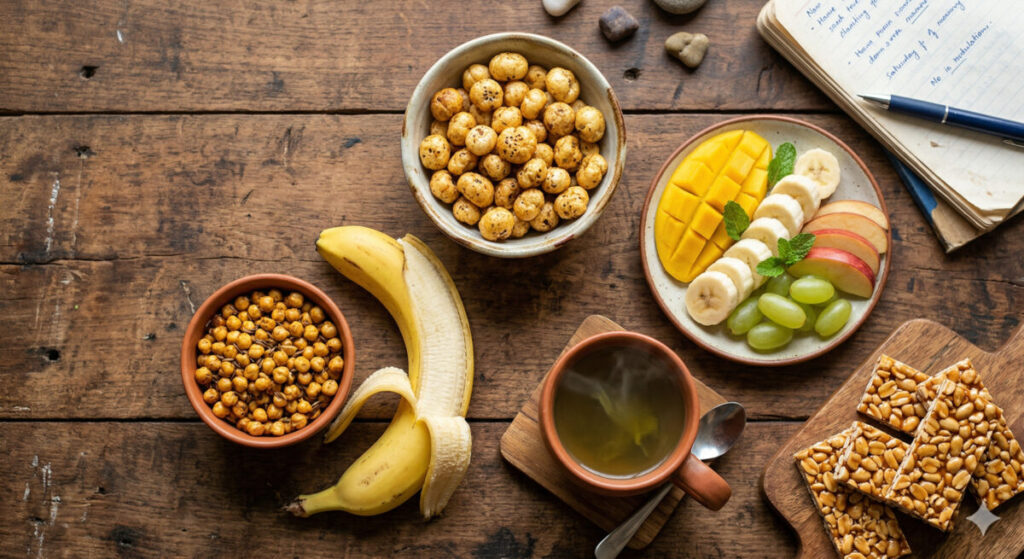
The right healthy evening snacks can completely change how you study. This guide lists 20 budget-friendly, brain-boosting snacks that Indian students can grab or make in minutes — including hostel-friendly no-cook options. No fancy ingredients, no expensive superfoods. Just real food that actually helps you focus and feel good.
It is 5 PM. Classes just ended. You are back at your desk, staring at your notes, and your stomach is making sounds that your roommate can probably hear through the wall.
This is the most dangerous hour of the Indian student’s day — not because of anything academic, but because of what you are about to eat. Most students reach for whatever is fastest: a packet of biscuits, a bag of chips, or one more round of chai with a glucose biscuit on the side.
These healthy evening snacks are not substitutes for your meals. They are the bridge between lunch and dinner that keeps your brain sharp, your energy stable, and your hunger from spiralling into distraction. And every single option on this list costs under ₹50 a serving — because we understand what it means to manage a student budget in India.
Why Evening Snacks Actually Matter for Students
Between 4 PM and 8 PM, most students experience what nutritionists call a “blood sugar dip.” After a day of mental exertion, your brain’s glucose supply is genuinely depleted. Without a snack, concentration drops, irritability rises, and even simple problems start feeling unsolvable.
According to research reviewed by Healthline, small nutrient-dense snacks stabilise blood sugar levels and prevent the mental fatigue that comes from extended periods without eating. For students preparing for exams or managing multiple subjects, this matters enormously.
The goal is not to eat for entertainment. The goal is to eat for function — to keep the brain performing at the level your study session demands.
What Actually Makes an Evening Snack “Healthy” for Students?
The word “healthy” gets thrown around a lot — and then plastered on packets of multigrain chips and “diet” biscuits that are mostly maida and sugar. Here is what it actually means when it comes to an evening snack for students.
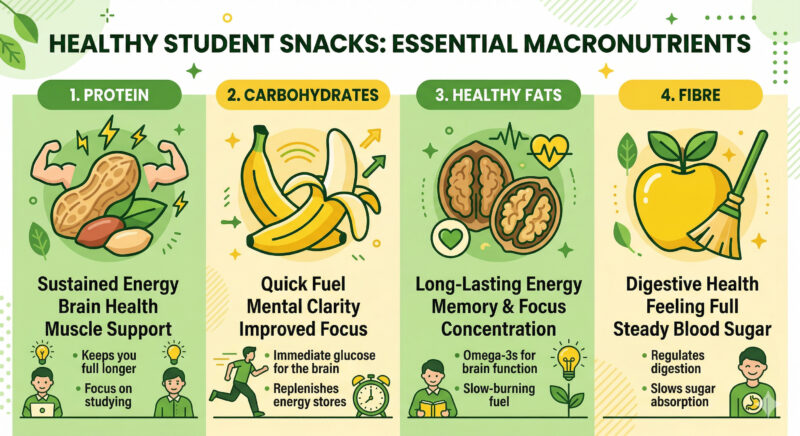
A truly healthy snack for a student should provide:
- Protein — to sustain energy and rebuild focus (chana, peanuts, eggs, curd)
- Complex carbohydrates — for steady glucose release, not a spike-and-crash (oats, fruits, roasted grains)
- Healthy fats — for brain function and satiety (nuts, peanut butter, seeds)
- Fibre — to keep you full and prevent overeating at dinner (vegetables, fruits, legumes)
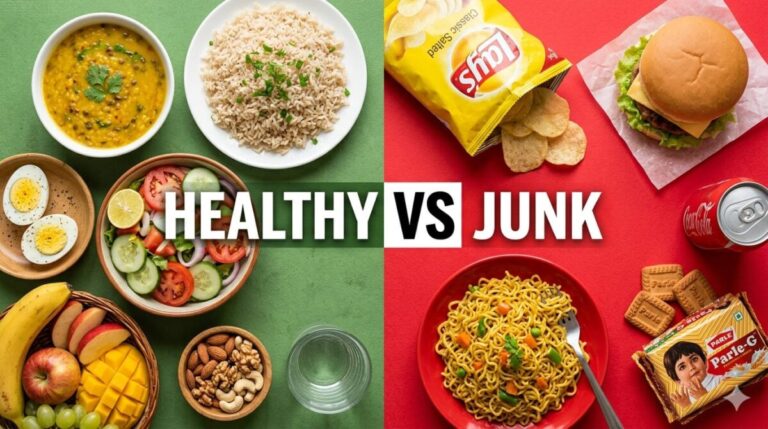
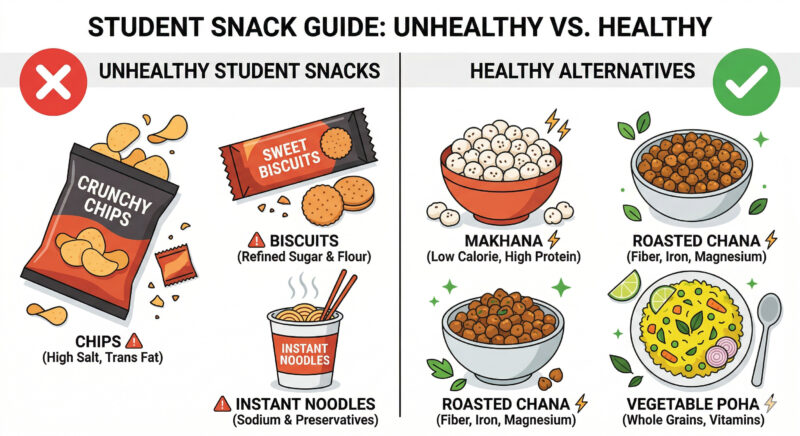
What it should not have: refined sugar, refined flour (maida), artificial flavourings, or excessive salt. By that measure, most popular student snacks — Parle-G, Monaco biscuits, instant noodles, chips — fail on almost every count.
Part 1: 10 Best Indian Healthy Evening Snacks for Students
🫘 Roasted Chana (Bengal Gram)
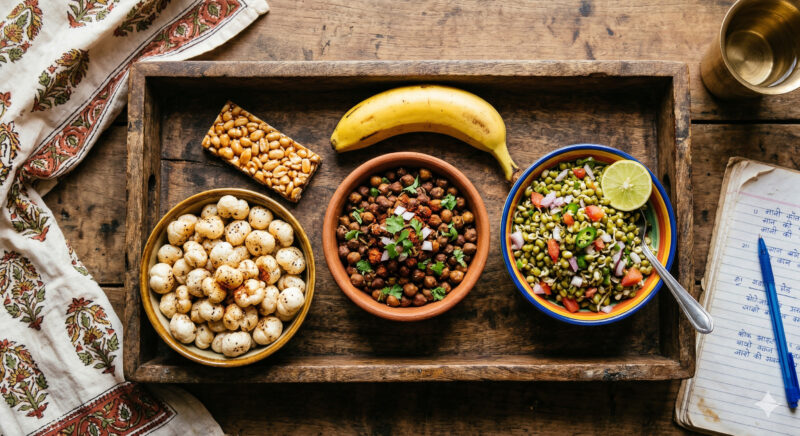
The most underrated brain food in India. A 30 g serving packs around 10 g of protein, loads of fibre, and iron. It is filling, crunchy, and requires zero preparation. Buy a packet from any kirana store for ₹10–15.
🍿 Roasted Makhana (Fox Nuts)
Light, crunchy, and surprisingly nutritious. Makhana is low in calories but high in magnesium, potassium, and protein. Roast them in a dry pan for 5 minutes with a pinch of rock salt and pepper. A great mindless-munching snack that will not leave you feeling heavy.
🥜 Peanut Chikki (Groundnut Jaggery Bar)
A classic Indian snack that combines the protein of peanuts with jaggery — a far healthier sweetener than refined sugar because it retains iron and other minerals. One small piece gives you a quick energy burst without the sugar crash. Available everywhere for ₹5–10 a bar.
🌾 Vegetable Poha (Flattened Rice)
Poha is a light, easy-to-digest snack that takes under 10 minutes to make. Add onion, green chilli, mustard seeds, and a squeeze of lemon. It is rich in iron, low in fat, and keeps you full without heaviness. Perfect for the 5 PM hunger window.
🥗 Sprouts Chaat
Soak moong dal overnight, let it sprout for a day. Mix with chopped onion, tomato, lemon juice, and chaat masala. One bowl gives you an extraordinary amount of protein, vitamin C, and fibre. A complete micro-meal that costs ₹15 to prepare and keeps you energised for 2–3 hours.
🍌 Banana with Peanut Butter
This combination is a nutritional powerhouse. The banana provides fast-acting glucose and potassium — both essential for brain function. The peanut butter adds protein and healthy fats that slow the sugar absorption, giving you sustained energy rather than a quick spike. Cost: ₹15–20.
🍳 Boiled Eggs (2 eggs)
Two boiled eggs give you around 12 g of protein, vitamin D, B12, and choline — a nutrient directly linked to memory and concentration. Boil a batch on Sunday and refrigerate for the week. The most cost-effective complete protein source an Indian student can access at ₹15–20.
🫐 Seasonal Fruit Chaat
Chop whatever fruit is in season — banana, apple, guava, papaya, or mango — and add a squeeze of lemon and a pinch of chaat masala. This transforms plain fruit into an exciting, flavourful snack rich in natural sugars, vitamins, fibre, and antioxidants. Ready in three minutes.
🧀 Curd (Dahi) with a Pinch of Jeera
A small bowl of homemade curd is a probiotic powerhouse. It supports gut health, provides calcium and protein, and the cool texture is genuinely refreshing after a warm afternoon. Add a pinch of roasted jeera for flavour. Your gut health directly influences your mood and focus — this is not a small thing.
🫙 Peanuts with Jaggery
A handful of raw or roasted peanuts paired with a small piece of jaggery is one of the oldest and most nutritious combinations in Indian eating. Peanuts are rich in protein and healthy fats; jaggery provides iron and a clean sugar hit. Costs about ₹10 and takes zero effort.
Part 2: 5 Quick No-Cook Healthy Evening Snacks (Ready in 2 Minutes)
🥜 Mixed Dry Fruit Handful
Almonds, walnuts, raisins, and cashews in a small fistful. Walnuts are especially valuable for students — they are the only nut with a significant amount of plant-based omega-3, which is directly linked to improved memory and cognitive function. Portion: one small fistful (30 g).
🍵 Green Tea + Dark Chocolate
One cup of green tea provides gentle caffeine plus L-theanine — a compound that promotes calm focus without the jitteriness of coffee. Pair with one or two squares of dark chocolate (70%+ cocoa). Dark chocolate increases blood flow to the brain and triggers the release of endorphins, improving your mood mid-study session.
🥛 Milk with Turmeric (Haldi Doodh)
Before you dismiss this as “old school,” consider: warm milk contains tryptophan, which your body converts to serotonin — the feel-good hormone that also promotes relaxation. Adding turmeric gives you curcumin, a potent anti-inflammatory compound. This is the best snack if you are studying in the evening and also want to wind down into a productive night session.
🍎 Apple Slices with Peanut Butter
This is the Indian student’s version of the classic combination. Apples provide quercetin — a flavonoid that helps protect brain cells — plus natural sugar and fibre. Peanut butter adds protein and healthy fat. The combination keeps your blood sugar stable for a good 2 hours. One apple and two spoons of peanut butter: ₹20–25.
🥚 Protein Shake with Milk and Banana
If you have a whey or plant-based protein powder at home, blend or shake it with 200 ml of milk and half a banana. This gives you 20–25 g of protein in under 3 minutes with no cooking. If you do not have protein powder, the milk and banana alone (without powder) still provides a solid 10 g of protein — completely sufficient for an evening snack.
Part 3: 5 Healthy Evening Snacks for Hostel Students (No Kitchen Needed)
Hostel life is a different game. No gas stove, no refrigerator access (or limited), and no time for elaborate food prep. These five snacks were chosen specifically for students living in hostels or PGs.
🥣 Instant Oats with Milk (No Cook)
Soak rolled oats in warm milk for 10 minutes — no cooking needed if you have a kettle. Add a banana or raisins on top. Oats are complex carbohydrates that digest slowly, providing a 3-hour energy window. Buy a 1 kg pack for ₹80–120 that lasts weeks.
🫘 Roasted Pumpkin Seeds
Pumpkin seeds (kaddu ke beej) are rich in zinc, magnesium, and tryptophan — nutrients that support mood, sleep quality, and focus. They are widely available in general stores and health food sections. One small packet costs ₹30–50 and lasts several days. Just open and eat — absolutely no prep required.
🍫 Dark Chocolate Bar (70%+ Cocoa)
Two to three squares of good dark chocolate — not Dairy Milk, but something 70% cocoa or above — reduces cortisol (your stress hormone), improves blood flow to the brain, and triggers a mild mood lift. It is the only truly indulgent snack on this list that is also genuinely good for you in small doses. Cadbury Bournville or Amul Dark work perfectly.
🫙 Sattu Drink (Roasted Gram Flour Water)
Sattu is one of the most nutritionally dense and affordable “superfoods” in India — it is just roasted Bengal gram flour. Mix 2 tablespoons in a glass of water with salt, lemon, and a pinch of jeera. It provides protein, fibre, and iron in minutes, keeps you full, and is cooling on the system. A 500 g bag costs ₹40–60.
🥕 Raw Vegetables with Chaat Masala
Sliced cucumber, carrot, radish, or capsicum with a sprinkle of chaat masala and lemon juice. This requires zero cooking, zero equipment beyond a knife, and costs almost nothing. The crunchiness itself is satisfying, the water content keeps you hydrated, and the vitamins and fibre are genuinely valuable. Probably the cheapest healthy snack on this entire list.

Quick Nutrition Reference: Top 10 Snacks at a Glance
Here is a at-a-glance comparison of the top snack options by key nutritional benefits. Use this to pick the right snack for your specific need — whether you want sustained energy, a protein boost, or something light before bed.
| Snack | Protein | Best For | Approx Cost |
|---|---|---|---|
| Roasted Chana | ~10 g/30g | Sustained energy + iron | ₹10–15 |
| Boiled Eggs (2) | ~12 g | Memory, focus, satiety | ₹15–20 |
| Sprouts Chaat | ~8–12 g | Full meal replacement | ₹10–15 |
| Banana + Peanut Butter | ~8 g | Brain glucose + fats | ₹20–25 |
| Mixed Dry Fruits (30g) | ~5 g | Omega-3, brain health | ₹30–40 |
| Roasted Makhana | ~4 g | Light, low-cal munching | ₹20–30 |
| Sattu Drink | ~7 g | Cooling, high energy | ₹10–12 |
| Pumpkin Seeds (30g) | ~5 g | Zinc, sleep quality | ₹15–20 |
| Green Tea + Dark Choc | ~2 g | Calm focus, mood | ₹20–30 |
| Instant Oats + Milk | ~8 g | 3-hour energy window | ₹20–25 |
Snacks That Look Healthy But Are Secretly Not
This is the part most articles skip. The Indian market is full of “healthy” labelled products that are really just cleverly packaged junk food. As a student trying to make smart choices, here are the ones to be especially careful about.
❌ “Diet” and “Multi-Grain” Biscuits
Marie Gold, Digestive biscuits, and multigrain varieties are still high in refined flour and sugar. The “multigrain” label often means very small amounts of mixed flours with little nutritional difference from regular biscuits. One sleeve of biscuits can have more sugar than a soft drink.
❌ Flavoured Yogurt Cups
Packaged fruit-flavoured yogurt (Epigamia, Nestle varieties) often contains as much as 15–20 g of added sugar per serving — similar to a candy bar. Always choose plain curd (dahi) from a dairy or homemade, and add your own fruit.
❌ “Energy” and “Protein” Bars
Most mass-market energy bars sold at convenience stores are essentially candy bars with some protein powder added. Check the ingredients — if the first two items are sugar or glucose syrup, it is a dessert, not a snack. Peanut chikki is almost always a better choice.
❌ Instant Noodles as a Snack
Maggi and similar products are high in sodium, made from refined maida, and low in meaningful nutrition. The occasional bowl is not the end of the world, but as a regular evening snack for a studying student, it causes more harm than good — including disrupting sleep and causing bloating.
❌ Packaged Fruit Juices
Real 0% concentrate juice is a rarity on Indian shelves. Most packaged juices contain more added sugar than whole fruit, with most of the original fibre removed. Always eat the whole fruit instead. It takes the same amount of time to peel a banana as it does to open a juice box.
5 Common Snacking Mistakes Students Make Every Evening
Expert Tips for Smarter Evening Snacking
These are not rules. They are small habits that compound into significantly better energy, focus, and health over a semester.

Frequently Asked Questions About Healthy Evening Snacks for Students
What are the best healthy evening snacks for students studying at night?
The best snacks for students studying in the evening are those that provide sustained energy without a crash: roasted makhana, boiled eggs, banana with peanut butter, roasted chana, or a small bowl of poha. These are high in protein and complex carbohydrates, which keep your brain alert without making you feel heavy or sleepy.
Are evening snacks bad for students trying to manage their weight?
No — evening snacks are not bad for weight management if they are nutrient-dense and portion-controlled. The problem is the type of snack, not the timing. Chips, biscuits, and sugary chai are the culprits. Replacing them with roasted chana, fruit chaat, or makhana keeps calories in check while preventing the extreme hunger that leads to overeating at dinner.
What can hostel students eat as a healthy snack without a kitchen?
Hostel students without a kitchen can rely on no-cook snacks: roasted makhana, peanuts, peanut chikki, banana with peanut butter, mixed dry fruits, fruit chaat, sattu drink, or overnight oats made with a kettle. These need zero cooking, cost very little, and are available at any general store or grocery shop across India.
How many calories should a student’s evening snack have?
A healthy evening snack for students should ideally be between 150–250 calories. This is enough to prevent hunger between lunch and dinner without replacing the meal. Focus on the nutritional quality — protein, fibre, and complex carbohydrates — rather than counting calories obsessively. Nutrient-dense snacks are naturally satisfying in smaller portions.
Which Indian snacks are best for brain health during exam season?
The best Indian snacks for brain health during exams are walnuts (rich in omega-3), roasted pumpkin seeds (zinc and magnesium), dark chocolate (improves brain blood flow), banana (glucose and potassium), and roasted chana (protein and iron for sustained focus). All of these are affordable, widely available across India, and backed by nutritional science. Sprouts chaat is also exceptional for its complete nutrient profile during high-stress periods.
Conclusion: Small Snack, Big Difference
What you eat between 4 PM and 7 PM has a more direct impact on your evening study session than almost any productivity technique you could apply. You can have the best healthy evening snacks plan, the most structured timetable, and the quietest study environment — but if your brain is running on biscuits and chai, you are always working at a fraction of your capacity.
The good news is that eating well as a student in India does not require expensive ingredients or complicated recipes. Roasted chana, makhana, sprouts, peanuts, and seasonal fruit are some of the most nutritious foods available anywhere in the world — and they cost less than a packet of chips.
Pick two or three options from this list and stock them at your desk starting today. Your evening study session will feel different within a week — not because of magic, but because you are finally giving your brain what it needs to perform.
Study Smarter, Eat Smarter
Explore more student lifestyle guides and free tools on Learnox — built for Indian students.