
 Soyeb Akhtar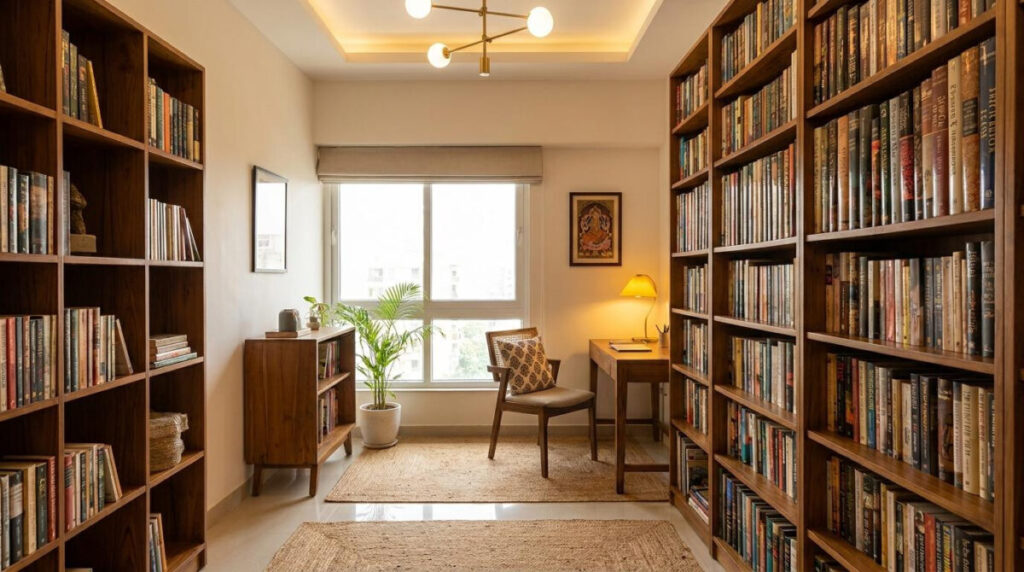
Creating a library room in your house does not require a big budget or a large apartment. This guide covers 15 practical ideas — from small corner setups to full dedicated rooms — with budget costs in rupees, furniture tips, lighting advice, and colour choices. Whether you live in a hostel, a 2BHK flat, or a family home, there is a setup here that works for you.
What Is a Library Room in a House?
A library room in a house is a dedicated space — however small — where you keep your books, study materials, and notes in one organised spot. It is your personal reading sanctuary.
Unlike a public library or school library, a home library is built around your needs. It can be a full spare room lined with bookshelves, or simply a corner of your bedroom with a wall-mounted shelf, a lamp, and a chair. The concept is the same: a purposeful space for focused reading and studying.
In India, the idea is catching on fast — not just among book lovers, but among students preparing for JEE, NEET, UPSC, and board exams who need a distraction-free environment at home. Having a fixed reading spot, even a small one, can dramatically improve how much you retain and how long you can focus.
Why Every Student Needs a Home Library Room
You have probably experienced this: you sit down to study in the living room, but someone puts on a TV serial. Or your younger sibling keeps interrupting. Or you just end up scrolling your phone because the environment does not feel like a study space.
Environment shapes behaviour more than willpower ever does. The moment you walk into a space that looks, feels, and smells like a study zone, your brain shifts into focus mode automatically.
Research from the Journal of Environmental Psychology consistently shows that a dedicated, low-clutter study environment significantly improves concentration and academic performance.
Here is what a proper home library room does for you:
- Reduces mental switching costs — your brain stops wasting energy resisting distractions
- Keeps all your resources in one place — books, notes, stationery, and devices
- Creates a study ritual — sitting in the same spot trains your brain to focus faster
- Improves retention — a quiet, familiar environment strengthens memory formation
- Builds reading habits — having books visible makes you more likely to pick them up
If you struggle to sit and study for more than 30 minutes without losing focus, chances are your environment is the problem — not your discipline. We cover this in detail in our guide on how to focus on studies.
Best Spaces to Build a Library Room in Your House
Most Indian students live in 2BHK or 3BHK apartments, or in shared hostel rooms — which means a dedicated library room is a luxury. But here is the truth: you do not need a full room. You need a dedicated corner.
1. A Bedroom Corner
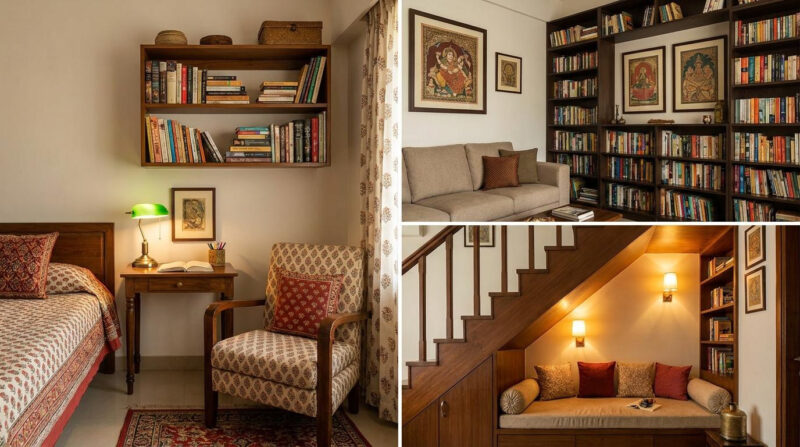
The fastest and cheapest option. Place a wall-mounted shelf above a small desk in one corner of your room, add a lamp, and you have a functional mini library. Keep this corner phone-free and use it only for studying. Over time, your brain will automatically associate this spot with focus.
2. A Spare Bedroom or Study Room
If you have a spare room — even a small one — this is the best option. You can install a proper bookshelf, a study desk, and create a fully immersive study environment. Even a 60–80 sq ft room works perfectly for a student.
3. A Living Room Wall
In many Indian homes, one wall of the living room can be converted into a floor-to-ceiling bookshelf. This is a design trend that is growing rapidly in Indian metro cities. It adds aesthetic value to the home while creating a functional library zone.
4. A Corridor or Passageway
Long corridors in apartments are wasted space. A floor-to-ceiling narrow bookshelf along a corridor, combined with a small reading nook at the end, creates a surprisingly effective library setup — without using room space at all.
5. Under the Staircase
Staircase triangles are one of the most underused spaces in Indian bungalows and independent houses. You can build custom shelves inside this space and add a reading chair with a reading lamp. It feels like a Harry Potter-style reading nook — and it works brilliantly.
How to Design a Library Room in House — Step by Step
Setting up a home library is not as complicated as it seems. Follow these five steps and you will have a functional, study-ready space in a weekend.
Step 1: Choose Your Spot and Measure It
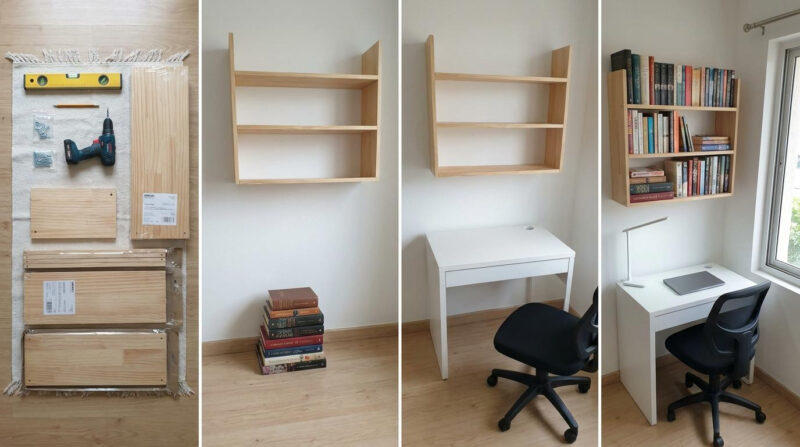
Before buying anything, decide where your library room will be and measure the available wall space. Note the height, width, and depth. This determines what size shelves you need. Even a 3-feet-wide wall can hold 80–100 books on three tiers.
Step 2: Decide on Your Bookshelf Type
There are three main options for Indian budgets:
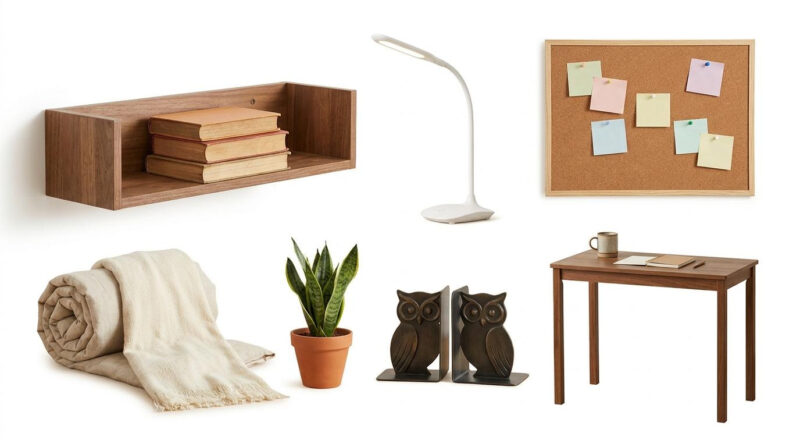
- Wall-mounted floating shelves — cheapest option, available at ₹200–₹600 per shelf on Amazon or local hardware stores
- Free-standing bookshelf — available at ₹1,500–₹6,000 from Pepperfry, Urban Ladder, or local furniture markets
- Carpenter-built custom shelves — most durable and space-efficient, costs ₹8,000–₹25,000 depending on size and wood type
For students on a tight budget, two or three wall-mounted floating shelves are the best starting point. You can always expand later.
Step 3: Set Up Proper Lighting
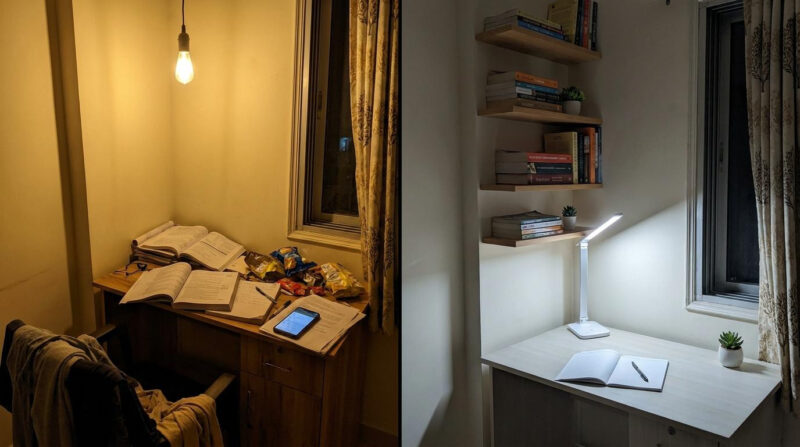
This is the step most people skip — and regret. Poor lighting causes eye strain, headaches, and makes you sleepy faster. Your library setup needs at least two light sources:
- Overhead ambient light — a ceiling fan with a light, or a floor lamp
- Task light — a focused desk lamp directly on your study area
Choose bulbs with a colour temperature of 4000K–5000K (cool white) for study hours. Avoid yellow bulbs at your desk — they strain the eyes faster during reading.
Step 4: Set Up a Reading/Study Desk
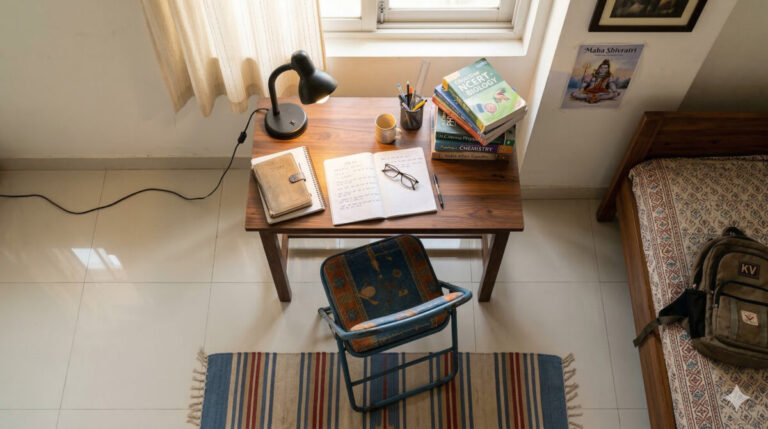
Your desk is the heart of the library room. It does not need to be expensive. A simple wall-mounted fold-down desk costs as little as ₹800–₹2,000 and works perfectly in small spaces. If you have more space, a standard student desk of 3–4 feet width is ideal.
Check our full guide on creating a study table setup under ₹2,000 for exact product recommendations.
Step 5: Organise Your Books Thoughtfully
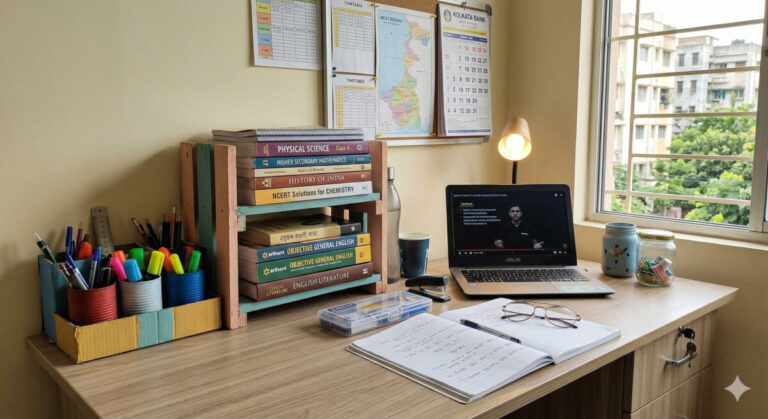
Do not just dump books on the shelf. A well-organised bookshelf is both functional and motivating. Sort by subject, then by author or book size. Keep your most-used books (textbooks, reference guides) at eye level, and fiction or lighter reads on the higher and lower shelves.
15 Library Room in House Ideas for Students (With Budget Range)
Here are 15 practical home library setups — from the simplest to the most complete — with rough budget estimates in rupees so you can pick what fits your situation right now.
- The ₹500 Corner Shelf Start — One wall-mounted shelf above your desk, a clip-on reading light. Minimal, but effective. Start here if you are short on budget.
- The 3-Tier Wall Shelf Setup — Three floating shelves on a single wall, arranged vertically with increasing depth. Holds 150–200 books. Cost: ₹1,500–₹2,500.
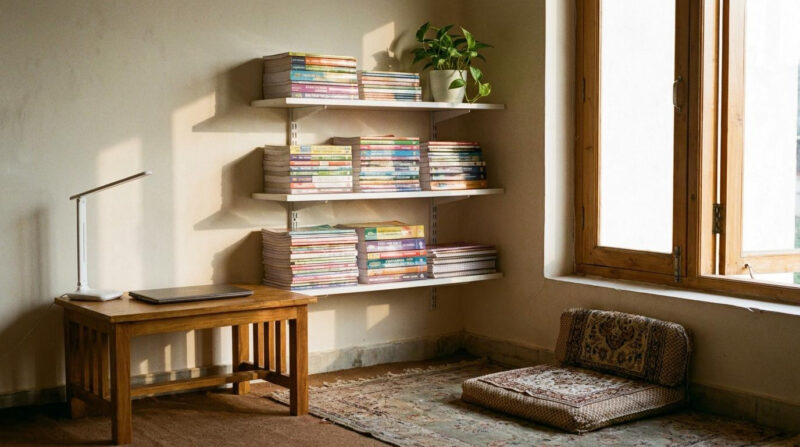
- The Bedroom Reading Nook — Wall shelf, a small armchair or floor cushion (gao takia), a floor lamp. Total cost: ₹3,000–₹5,000.
- The Vertical Book Tower — A tall, narrow free-standing bookshelf (available at IKEA, Pepperfry) that uses vertical space. Good for rooms with little floor space. Cost: ₹2,000–₹4,000.
- The Study Desk Library Combo — A desk with built-in shelves or hutch above it. Combines workspace and book storage in one unit. Cost: ₹4,000–₹8,000.
- The Corridor Library — Mount shelves along a corridor wall, height 6–7 feet. Adds storage without eating room space. Cost: ₹3,000–₹7,000 for carpenter-fitted shelves.
- The Living Room Feature Wall — One full wall of the living room converted to bookshelves with a small study chair in front. Great for joint families where a private room is not possible. Cost: ₹10,000–₹20,000.
- The Window Seat Library — A bench built under a window, with storage inside the bench and shelves on either side. This doubles as a reading couch and a library corner. Cost: ₹8,000–₹15,000 with carpenter help.
- The Under-Stair Nook — Bookshelves fitted into the triangular space under a staircase. A chair and a reading lamp complete the setup. Cost: ₹5,000–₹12,000.
- The Repurposed Almirah Library — Take an old wooden almirah, remove the doors, and add shelves inside. Paint it white or a deep forest green. Budget-friendly and creative. Cost: ₹500–₹2,000 if you already have the almirah.
- The Dedicated Study Room Library — A spare room (even 8×8 feet) with a full wall of bookshelves, a study desk, and proper task and ambient lighting. The closest to a real library room at home. Cost: ₹15,000–₹35,000.
- The Biophilic Library — Any of the above setups, but with plants added. A small snake plant or pothos on the shelf reduces stress and improves air quality. Plants add warmth to any study space. Added cost: ₹200–₹800.
- The Aesthetic Study Corner — A trending setup popular on Instagram and YouTube: pastel-toned shelves, string lights, matching notebooks, and a small corkboard. Great for motivation and Reels content. Cost: ₹3,000–₹7,000.
- The Dual-Use Guest Room Library — Convert the guest room into a library-guest room. Install bookshelves on one wall, keep the bed, and add a fold-out study desk. Best of both worlds. Cost depends on furniture already present.
- The Whole-House Reading Culture — Put small shelves in the kitchen, bathroom, and bedroom. Keep books everywhere. This is less a single library room and more a reading-first home — and it works surprisingly well for students who struggle to sit in one place for long.
Budget Library Room Setup Under ₹5,000
If you are a college student or someone living in a rented flat, a full carpenter-built library may not be realistic right now. Here is an exact shopping list to build a functional home library on a student budget:
| Item | Where to Buy | Approx. Cost |
|---|---|---|
| Wall-mounted floating shelf (set of 3) | Amazon India / Local hardware store | ₹500–₹900 |
| Drill & anchor bolts (or use adhesive strips for rental) | Local hardware store | ₹150–₹300 |
| Desk lamp (cool-white LED, 5W–9W) | Amazon / Flipkart / Local shop | ₹300–₹700 |
| Compact study chair or floor cushion (gao takia) | Local furniture market / Amazon | ₹500–₹1,500 |
| Bookends (to keep books upright) | Amazon / Daiso-type stores | ₹150–₹400 |
| Small indoor plant (money plant / pothos) | Local nursery | ₹100–₹300 |
| Adhesive cable clips (for desk lamp wire) | Amazon / local shop | ₹80–₹150 |
| Total Estimated Cost | ₹1,780–₹4,250 |
This setup will get you a fully functional reading corner with organised book storage, proper task lighting, and a comfortable reading seat — all under ₹5,000. Once you have the basics in place, you can upgrade one element at a time.
For even more ways to optimise your study space on a shoestring, see our guide on how to create a study space in a small room.
Lighting and Colour Tips for Your Home Library Room
Lighting is the single most underrated element of a study-ready home library. Get it wrong, and you will have eye strain and sleepiness within an hour. Get it right, and you can study comfortably for 3–4 hours at a stretch.
Best Lighting Setup for a Library Room
- Primary desk lamp: Choose a lamp with a colour temperature of 4000K–5000K (cool white or neutral white). Avoid anything below 3000K (warm yellow) for task lighting at a desk.
- Ambient ceiling light: A regular white ceiling light with at least 800 lumens for the room. Avoid studying in a dark room with only a desk lamp — the contrast strains your eyes.
- Shelf lighting (optional): LED strip lights under shelves add both aesthetics and visibility to your book collection. Cost: ₹300–₹800 for a basic set.
- Natural light: If possible, face your desk towards a window. Morning sunlight improves alertness and mood. Just ensure your screen or book is not in direct glare.
Best Colours for a Library Room in an Indian Home
Wall colour directly affects your focus and mood while studying. Here is a quick reference based on how much natural light your room gets:
- Low natural light (north-facing rooms): Light cream, warm white, or pale sage green. These reflect available light and make the space feel open.
- Good natural light: You have more flexibility. Consider a warm beige, soft terracotta accent wall, or dusty rose. These are calming and reduce eye fatigue.
- Dark, dramatic library look: Deep navy blue, hunter green, or warm charcoal work well as a single feature wall behind the bookshelf. Pair with warm lighting.
- Wood tones: Natural wood shelves and desks are the safest choice for any Indian home — they look premium, age well, and match any wall colour.
💡 Expert Tip: In Indian homes where walls are often painted in bright or flashy colours (thanks to family decisions!), a simple solution is to paint only the bookshelf wall in your preferred library colour. That one wall instantly creates a “library zone” feel, even in a shared room.
Must-Have Items for a Home Library Room
Regardless of your budget or the size of your space, a well-functioning home library needs these core elements:
Non-Negotiables
- Bookshelf or wall shelves — to store and display your books
- Task lamp — for focused, eye-safe reading light
- Comfortable seating — a chair with back support, or a floor cushion for short reading sessions
- Dedicated study desk — even a small one; do not study on a bed
- Bookends — to keep books upright and prevent shelf damage
Nice to Have (Add When Budget Allows)
- A reading chair with armrests — for extended reading sessions
- Cable organiser — keeps the desk clean and wire-free
- A small plant — improves mood and air quality
- A corkboard or whiteboard — for notes, schedules, and to-do lists
- Bookmarks and sticky notes — keeps your study sessions active and efficient
- A small Bluetooth speaker — for lo-fi or ambient study music (optional)
Expert Tips for Building a Study-Ready Library Room at Home
Interior designers who specialise in Indian homes and study spaces have a few principles they return to again and again. These are not trends — they are time-tested design decisions that work in any budget and any size of home.
Tip 1 — Storage First, Aesthetics Second: Figure out how many books you have, and how many you expect to add in the next year. Your shelves should hold 30% more than your current collection. Running out of shelf space six months later is one of the most common home library mistakes.
Tip 2 — Use Vertical Space Aggressively: In Indian apartments where floor space is limited, vertical bookshelves (going up to 7–8 feet) dramatically increase storage without using more floor area. A step stool or library ladder solves the accessibility problem.
Tip 3 — Leave Breathing Space: Not every shelf needs to be packed edge to edge. Leave some open space on each shelf — it makes the setup feel intentional rather than cluttered, and gives you room to add new books.
Tip 4 — Keep It a Phone-Free Zone: The effectiveness of your home library room depends on one rule: no phone at the reading desk. Put it in another room, or at least in a drawer. This single habit can recover 2–3 hours of lost study time per day. Read more in our guide on how to study for long hours without losing focus.
Tip 5 — Use Books as Décor: Organise a section of your bookshelf by colour, or display your favourite books with their covers facing outward. This is not just aesthetics — it makes you more likely to pick those books up. Visible books invite reading. Hidden books stay unread.
Common Mistakes to Avoid When Setting Up a Home Library
Many students put effort into creating a study setup and then wonder why it is not working. Here are the most common mistakes — and how to fix them.
❌ Mistake 1: Setting up near the TV or in a high-traffic area.
A library room only works if it is in a low-distraction zone. Even background noise from a TV in the next room reduces focus. Choose the quietest corner of your home.
❌ Mistake 2: Using a single dim bulb.
Many Indian rooms use 40W yellow bulbs — which are completely inadequate for reading. A dim, warm light makes you sleepy within 20 minutes. Invest ₹300 in a proper cool-white LED desk lamp. It is one of the highest-ROI study purchases you will ever make.
❌ Mistake 3: Mixing study materials with non-study items.
If your study desk also holds your phone charger, earphones, snacks, and random stationery, it stops being a study desk. Keep the library area exclusively for reading and studying. This is what makes your brain associate the spot with focus.
❌ Mistake 4: Buying furniture before measuring your space.
This is extremely common. Always measure your available wall width, depth, and height before buying any shelf or desk. A bookshelf that is 2 inches too wide will not fit, and returning furniture is a headache.
❌ Mistake 5: Waiting for the “perfect” setup before starting.
The biggest mistake of all. You do not need a perfect library to start reading and studying better. Put three books on a shelf, set a lamp on your desk, and sit down to study tonight. Build from there. Perfection is the enemy of progress.
Frequently Asked Questions
How much does it cost to create a library room in a house in India?
You can start with as little as ₹1,500–₹3,000 using wall-mounted shelves and a desk lamp. A mid-range setup with a proper bookshelf, desk, and chair typically costs ₹8,000–₹20,000. A full carpenter-built dedicated library room costs ₹25,000–₹60,000 depending on size and wood quality. The good news is that you can build it incrementally — start small and keep adding.
What is the ideal size of a library room in a house?
There is no minimum size requirement. A 4×4 feet corner with a shelf, chair, and lamp is a functional library. For a dedicated room, 80–120 sq ft is comfortable for a student. The rule is simple: any space that is exclusively dedicated to reading and has books, seating, and light qualifies as a home library.
Which colour is best for a library room in an Indian home?
Warm whites and sage green are the safest choices for Indian homes with moderate natural light. If you want a dramatic library look, use deep navy blue or hunter green on the feature wall behind the bookshelf. Avoid bright reds, oranges, or neon colours — they are stimulating rather than focusing. Wood tones (shelves and desk) go with almost any wall colour.
Can I create a home library in a small rented apartment?
Yes, absolutely. For rented apartments where you cannot drill walls, use adhesive wall strips (Command Strips) for floating shelves, or invest in a free-standing bookshelf that you can take with you when you move. Floor cushions replace chairs nicely in small spaces. Even a 3-shelf setup in a bedroom corner creates a meaningful reading environment.
What furniture do I need for a library room in a house?
The bare minimum is: a bookshelf (or wall shelves), a desk, a chair, and a desk lamp. Everything else — plants, corkboards, reading chairs, cable organisers — is an upgrade. Start with the essentials and add comfort elements as your budget grows.
Conclusion: Your Library Room Does Not Have to Be Perfect to Be Powerful
Creating a library room in your house is one of the best investments you can make as a student — not in money, but in your own focus and learning environment. The data is clear: dedicated study spaces lead to better retention, longer focus sessions, and stronger study habits.
You do not need a big apartment or a fat budget. Three shelves, a desk lamp, a comfortable seat, and a rule of no-phone-at-the-desk — that is genuinely enough to get started. Build it this weekend.
And remember: the best library room is the one that you actually use. Start small, keep it organised, and expand as you grow.
Ready to Build the Perfect Study Setup?
Use our free Study Planner and Pomodoro Timer to make the most of your new library room — no login required, 100% free for Indian students.
Muito útil. YouTube para MP4/MP3 no navegador: SaveYT (). SaveYT