 Soyeb Akhtar
Setting up a productive study space in small room doesn’t have to be challenging. This comprehensive guide provides 8 actionable strategies to help you transform any compact area into a focused learning environment. Whether you need ideas for a small bedroom, want to build a study corner in a hostel, or are looking to optimize your existing desk setup, this article covers furniture selection, lighting solutions, organization techniques, and ergonomic considerations. By following these practical tips, you’ll maximize your space while maintaining focus and productivity.
73% of students improve focus with a dedicated study space
42% of Indian students study in rooms under 100 sq ft
📑 Table of Contents
- Introduction: Why Small Spaces Need Smart Solutions
- Tip 1: Choose Multi-Functional Furniture for Your Study Setup
- Tip 2: Optimize Your Lighting for Better Focus
- Tip 3: Use Vertical Storage to Maximize Space
- Tip 4: Create a Dedicated Study Corner in Your Bedroom
- Tip 5: Control Noise and Distractions
- Tip 6: Invest in an Ergonomic Chair
- Tip 7: Implement Smart Organization Systems
- Tip 8: Personalize Your Study Setup
- Expert Tips from Education Professionals
- Common Mistakes When Setting Up Study Spaces
- Frequently Asked Questions
- Conclusion & Final Thoughts
🎯 Introduction: Why Small Spaces Need Smart Solutions
In today’s world where remote learning and online education dominate, knowing how to create a study space in a small room has become a critical skill. Whether you’re a college student living in a hostel, a school student sharing a bedroom with siblings, or a professional working from home in limited square footage, you face a unique challenge: building a productive setup that actually works.
The good news? It’s entirely achievable with the right approach. Small rooms don’t limit your learning potential — they simply require strategic planning and intelligent furniture choices. This guide will walk you through 8 proven methods to help you build an effective study corner, whether you’re working with a tiny bedroom, a shared hostel room, or a compact home office.
Research shows that 73% of students who have dedicated study spaces experience improved focus and better grades. A well-organized study corner can increase productivity by 40% compared to studying on a bed or sofa. The challenge isn’t your space’s size — it’s how effectively you use it.
💡 Tip 1: Choose Multi-Functional Furniture for Your Study Setup

When space is limited, furniture selection becomes your most powerful tool. Multi-functional pieces are game-changers for small rooms because they eliminate the need for multiple separate items.
Wall-Mounted Fold-Down Desks
A wall-mounted fold-down desk is perfect for small rooms — it gives you a full workspace without consuming permanent floor space. During study hours, you unfold it and get to work. When you’re done, fold it up and your room feels open again. These desks typically range from 28–48 inches wide, providing sufficient space for a laptop and study materials.
Floating Desks
Floating desks mounted on walls create the illusion of more floor space — great for tight rooms. They typically cost between ₹5,000 to ₹15,000 and can support up to 50 kg. Pair one with a rolling chair that tucks underneath and you’ve got an optimized setup.
Under-Bed Storage Solutions
Getting creative with existing furniture is key in a small room. Under-bed storage drawers let you store textbooks, notebooks, and supplies without taking up additional space — especially useful when your study area shares the room with your sleeping space.
Murphy Desk Combinations
For a bedroom that doubles as a study area, Murphy desk combinations work brilliantly. These fold-down wall units can include shelving above and fold completely flat when not in use, freeing up the room for other activities.
☀️ Tip 2: Optimize Your Lighting for Better Focus
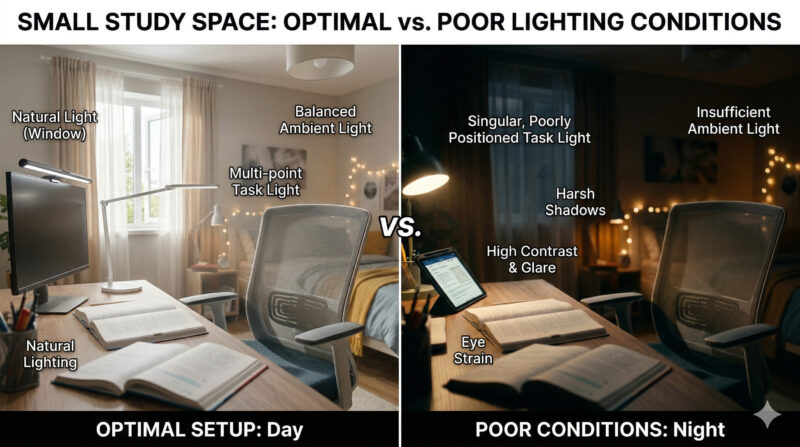
Proper lighting is absolutely essential for any study space. Poor lighting causes eye strain, headaches, and reduced concentration. The ideal setup combines natural light with task lighting.
Natural Light Positioning
Position your desk near a window if possible. Natural light improves mood, reduces eye fatigue, and boosts productivity. Place your desk perpendicular to the window (not facing it) to minimize glare on your screen.
Task Lighting Solutions
Add a focused desk lamp to your setup. LED desk lamps are energy-efficient and produce minimal heat. Mount them on articulating arms so you can adjust the angle based on what you’re studying — 3000–4000K color temperature is ideal for study areas.
Ambient Lighting
Good study lighting requires balancing different light types. Install soft ambient lighting using:
- Wall-mounted sconces for even light distribution
- Strip LED lights behind shelves for mood and functionality
- Dimmable ceiling lights to adjust brightness
- Warm white bulbs (2700K) for eye comfort during long study sessions
Pro Tip: Combine 40–50 watts of desk lighting with 20–30 watts of ambient lighting for optimal focus in your study corner.
📚 Tip 3: Use Vertical Storage to Maximize Space
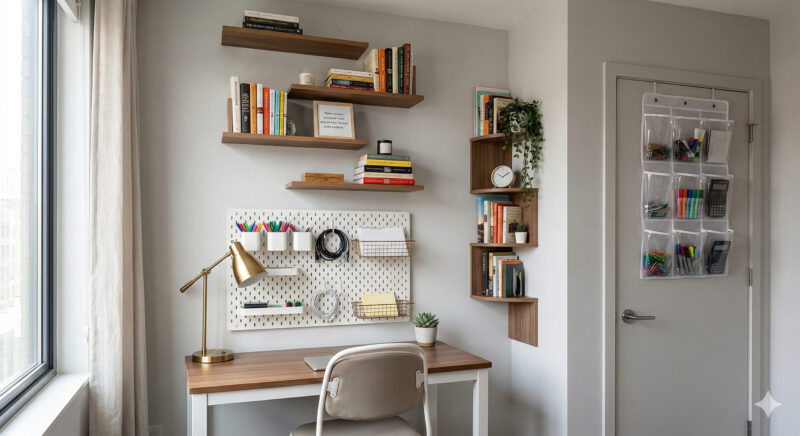
When floor space is tight, think vertically. Your walls become valuable real estate — use them wisely.
Wall-Mounted Shelving Systems
Install floating shelves or wall-mounted bookcase units above your desk. These create storage without consuming any floor space. Use 2–3 shelves at eye level and above, organizing:
- Frequently used textbooks at arm’s reach
- Reference materials on upper shelves
- Decorative items for motivation and mood
- Storage boxes for supplies and papers
Corner Shelving Units
L-shaped corner shelving units make great use of typically wasted corner space. They maximize both walls in a corner, doubling your storage capacity without expanding your setup’s footprint.
Pegboard Organization
Pegboards offer flexible organization — you can arrange hooks, baskets, and small shelves to match your specific needs. Update the layout as your needs change without buying additional furniture.
Over-Door Organizers
Don’t forget the space behind your door. Over-door organizers provide 10–15 additional storage pockets without taking up any floor or wall space in your study area.
🛏️ Tip 4: Create a Dedicated Study Corner in Your Bedroom
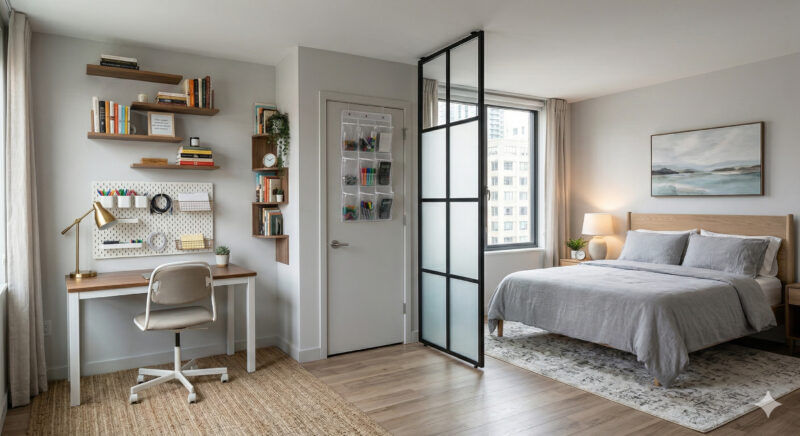
When your bedroom is also your study room, the answer is clear zone division. Creating a study corner that’s visually and functionally separate from your sleeping area improves focus dramatically.
Room Dividers and Partitions
Use folding screens, curtains, or plant-based dividers to physically separate your study corner from your sleeping zone. This psychological boundary helps your brain switch into “study mode” when you sit at your desk. Options include:
- Sliding barn doors (3–5 feet wide)
- Sheer curtains on tension rods
- Tall bookshelves as natural dividers
- Rolling screens with storage
Color Coding Your Zones
Use different wall colors for your study corner. A calming blue or green accent wall promotes focus, while warmer tones near your bed encourage relaxation. This helps your mind shift between studying and resting modes.
Strategic Lighting Zones
Your study area should have independent lighting from your sleeping area. Install separate switches so you can light only the desk zone when working at night without disturbing your sleep space.
Furniture Arrangement Strategy
Position your desk facing away from your bed. This removes the visual distraction of an unmade bed and keeps your study setup mentally distinct from your sleeping space.
🔇 Tip 5: Control Noise and Distractions
Studying in a shared living environment requires smart sound management. Noise is one of the biggest productivity killers, directly affecting concentration and learning retention.
Sound Dampening Solutions
Add soft furnishings that absorb sound:
- Area rugs (reduce echo and footstep noise)
- Thick curtains or acoustic panels
- Foam wall panels painted to match décor
- Bookcases filled with books (excellent sound absorbers)
- Fabric wall hangings or tapestries
Noise-Canceling Tools
Invest in quality noise management tools:
- Noise-canceling headphones (₹2,000–8,000)
- White noise machines or apps
- Earplugs designed for study (avoid complete silence though)
- Background music or binaural beats
Digital Distraction Management
Your setup should minimize digital distractions:
- Use app blockers to restrict social media
- Turn off phone notifications
- Put devices in a different room or drawer
- Use website blockers during study time
Creating a “Do Not Disturb” Signal
In shared housing (dorms, family homes), use visual cues. A closed door, a sign, or wearing headphones signals to others that you’re in focus mode and shouldn’t be interrupted.
🪑 Tip 6: Invest in an Ergonomic Chair
Many students focus on the desk and forget the single most important element: the chair. You’ll spend 6–8 hours daily sitting, making ergonomics crucial for your long-term health and focus.
What Makes a Chair Ergonomic?
Look for chairs with:
- Lumbar Support: Proper lower back support prevents spinal strain
- Adjustable Height: Your feet should rest flat on the floor, knees at 90 degrees
- Armrests: Positioned so arms rest at desk height
- Seat Depth: 16–18 inches to support thighs without cutting off circulation
- Swivel and Tilt: Allows movement and position changes
Budget-Friendly Chair Options
You don’t need to spend a fortune on a good chair:
- ₹3,000–5,000: Basic office chairs with lumbar support
- ₹5,000–10,000: Mid-range gaming chairs (surprisingly good for studying)
- ₹10,000+: Premium ergonomic chairs with full customization
DIY Ergonomic Improvements
On a tight budget, try these quick fixes:
- Place a pillow behind your lower back for lumbar support
- Use a footrest to achieve proper leg positioning
- Add cushioning to a standard chair
- Ensure your desk height allows elbows to rest at 90 degrees
Desk Height Considerations
Your desk should be 28–30 inches high for optimal arm positioning. Make sure:
- Wrists are straight when typing
- Monitor is at eye level (about arm’s length away)
- No shoulder hunching or neck strain
🗂️ Tip 7: Implement Smart Organization Systems
Clutter is the enemy of focus. A well-organized study area can actually look and feel bigger — and help you concentrate much better.
The Zone System
Divide your study area into functional zones:
- Active Study Zone: Desk with current materials only
- Reference Zone: Shelves with textbooks and notes
- Storage Zone: Closed storage for completed work
- Break Zone: A small area for stretching or refreshing
Color-Coded Organization
Use colors for quick identification:
- Red folders for urgent assignments
- Blue folders for completed work
- Green folders for reference materials
- Yellow folders for ongoing projects
Labeling Everything
Keep your space organized long-term by:
- Labeling all drawers, boxes, and shelves
- Using a label maker for a professional appearance
- Creating an inventory of what’s stored where
- Updating labels as your system evolves
Daily Organization Routine
Build these simple habits:
- 5 minutes at start: Clear desk of previous day’s materials
- During studying: Put completed work in designated folders
- End of day: Organize desk for next session
- Weekly: Deep clean and reorganize shelves
✨ Tip 8: Personalize Your Study Setup
Want a study space you’ll actually enjoy using? Make it personal. Your corner should reflect your personality and inspire you to sit down and get to work.

Motivational Elements
Boost motivation with:
- Display achievement certificates and awards
- Create a vision board with study goals
- Post your academic timeline and milestones
- Include quotes and affirmations that inspire you
- Display photos of mentors or role models
Color Psychology for Small Study Spaces
Colors influence mood and focus:
- Blue: Promotes calmness and focus (ideal for primary walls)
- Green: Reduces stress and improves concentration (great for accent walls)
- Yellow: Boosts energy and creativity (good for small accents)
- Purple: Encourages learning and intuition (accent wall option)
- Avoid: Bright red or orange in study areas (too stimulating)
Plants and Natural Elements
Adding greenery improves air quality and reduces stress. Best low-maintenance plants for small rooms:
- Money plant (climbing, doesn’t take floor space)
- Snake plant (tolerates low light, minimal care)
- Pothos (grows on walls or shelves)
- Spider plant (purifies air, easy to maintain)
- Bamboo plant (lucky plant in Indian culture)
Minimalist Aesthetics
Keep your space clean and organized:
- Display only current study materials on your desk
- Keep surfaces clean and clutter-free
- Choose furniture in complementary colors
- Remove items that don’t serve a purpose
- Embrace the “less is more” philosophy
💼 Expert Tips from Education Professionals
From Dr. Neha Sharma, Educational Psychologist
“Students setting up a study space in a small room often overlook the psychological aspects. Beyond physical setup, your study corner should trigger a mental shift into learning mode. This happens through consistent routine and environmental cues. I recommend studying at the same time daily in the same location — this builds neural pathways that enhance focus.”
From Prof. Rajesh Kumar, Study Skills Coach
“I’ve helped hundreds of students optimize compact study setups. The most successful ones follow the ‘sacred space’ principle: they treat their study area with respect, keep it for studying only (not eating or chatting), and maintain a ritual before studying — like brewing tea or reviewing their goals. An effective study space creates a psychological sanctuary.”
Interior Design Tips for Small Spaces
Professional interior designers suggest these principles:
- Use mirrors strategically to create an illusion of space
- Keep wall color consistent (light colors make spaces feel bigger)
- Maintain 30% empty wall space to avoid feeling cramped
- Use clear/transparent furniture when possible
- Layer lighting instead of relying on one source
Health Professional Recommendations
Doctors and physiotherapists recommend:
- Take a 5-minute break every 30 minutes
- Perform neck and shoulder rolls every hour
- Stand and stretch for 2 minutes per 30 minutes of sitting
- Keep water within reach to stay hydrated
- Maintain room temperature between 18–22°C for optimal focus
⚠️ Common Mistakes When Setting Up a Study Space in a Small Room
Mistake #1: Overcrowding the Desk
The Problem: Students often place too much on their desk — books, decorations, stationery, and more. This creates visual clutter and reduces actual workspace.
The Solution: Keep only your current subject’s materials on your desk. Store everything else immediately after use. At least 70% of your desk surface should stay clear.
Mistake #2: Poor Cable Management
The Problem: Tangled wires and cables make any setup look chaotic and consume visual space.
The Solution: Use cable clips, conduits, and organizers. Route cables behind furniture or along walls. Label each cable so you know what it powers.
Mistake #3: Neglecting Air Quality
The Problem: Small enclosed study spaces often have poor ventilation, leading to stuffiness and reduced alertness after 30–45 minutes.
The Solution: Ensure proper ventilation. Keep windows open when possible. Place plants for natural air purification. Your study corner should feel fresh and breathable.
Mistake #4: Choosing Comfort Over Support
The Problem: Students often use comfortable lounge chairs or cushions instead of proper study chairs, leading to poor posture and back pain.
The Solution: Invest in a proper study chair, even if it feels less comfortable initially. Your body adapts within a week, and long-term health is worth the investment.
Mistake #5: Ignoring Glare Problems
The Problem: Reflections from windows or monitors cause eye strain during long study sessions.
The Solution: Use matte screen protectors, anti-glare films on windows, and position your desk perpendicular to light sources. Adjust curtains to control light direction.
Mistake #6: Static Setups
The Problem: Many students set up their space once and never adjust it, even when it stops working efficiently.
The Solution: Evaluate your setup monthly. Ask yourself: What’s working? What causes distraction? What could be improved? Your ideal setup will evolve over time.
Mistake #7: Ignoring Storage Solutions
The Problem: Without proper storage, small spaces become cluttered with books and papers stacked on floors and shelves.
The Solution: Plan storage before you start studying. Invest in shelves, under-bed storage, vertical organizers, and filing systems. A designated place for everything keeps the space functional.
Mistake #8: Making It Too Serious
The Problem: Some students create cold, sterile spaces that feel more like offices, making studying feel punishing.
The Solution: Balance functionality with personality. Add plants, warm lighting, motivational quotes, and personal touches. Your study corner should feel inviting — not something you dread.
❓ Frequently Asked Questions (FAQs)
• Basic Setup (₹8,000–15,000): Simple desk, basic chair, shelves
• Mid-Range Setup (₹15,000–30,000): Better furniture, lighting, organization
• Complete Setup (₹30,000+): Quality ergonomic chair, multi-functional furniture, professional lightingYou can start basic and upgrade gradually. Don’t wait for a perfect budget — begin with what you have.
• Use room dividers or curtains to create visual separation
• Establish clear time boundaries when the space is exclusively for studying
• Communicate with roommates about your needs
• Use headphones and noise management tools
• Choose times when roommates are typically outIt requires cooperation, but it’s entirely possible with clear boundaries and mutual respect.
• Task Lighting: 4000–5000K (cool white) for focused work
• Ambient Lighting: 2700–3000K (warm white) for general comfort
• Overall Balance: 3000–4000K provides the best mix of focus and comfortAvoid using only warm yellow lighting — it reduces alertness. However, some warm ambient light in the evening makes the space feel less harsh.
• Daily: Declutter your desk at the end of each session
• Weekly: Organize shelves and file completed work
• Monthly: Deep clean and evaluate what’s working
• Quarterly: Major reorganization and layout adjustmentsA few minutes daily saves hours of cleanup later and keeps your space consistently productive.
• Pros: Compact, portable, affordable, flexible
• Cons: Limited workspace, poor ergonomics, screen height issuesFor short sessions, a laptop desk works fine. But if you’re spending 6+ hours daily at your desk, investing in a proper full-size desk and chair is worth it — your back and neck will thank you.
• Standard Desk Height: 28–30 inches from floor
• Elbow Position: Arms should rest at 90 degrees on the desk
• Monitor Height: Top of screen at eye level (about 50–70 cm away)
• Tip: If you’re particularly tall or short, adjust chair height rather than the desk Getting this right prevents neck and back strain during long study sessions.
• Low light causes eye strain, fatigue, and reduced concentration
• Studies show productivity drops 30–40% in poor lighting
• Headaches and eye discomfort are common in dimly lit space seven on a tight budget, a ₹500–1,000 desk lamp significantly improves your study experience. It’s one of the best investments you can make.
📚 External Resources & References
For further reading on study environments and productivity:
🎓 Conclusion: Your Journey to Creating the Perfect Study Space
Learning how to create a study space in a small room is one of the best investments you can make in your education. Throughout this guide, we’ve explored 8 comprehensive strategies — from smart furniture choices to personal touches — to help you build a setup that genuinely supports your academic goals.
To recap, a successful small room study space requires:
- ✅ Multi-functional furniture that maximizes space
- ✅ Optimal lighting for sustained focus
- ✅ Vertical storage solutions
- ✅ Clear physical and psychological zone separation
- ✅ Noise and distraction management
- ✅ Ergonomic seating and desk setup
- ✅ Smart organization systems
- ✅ Personal touches that inspire learning
Remember, there’s no one-size-fits-all approach. Your ideal setup depends on your learning style, daily schedule, and personal preferences. Start with the most impactful changes (lighting and seating), then gradually implement other improvements as your budget allows.
The beautiful thing about small spaces is this: limitations breed creativity. Some of the most productive study setups exist in tiny rooms because their owners prioritized efficiency over square footage. Your small room isn’t a limitation — it’s an opportunity to build a hyper-optimized learning environment.
Start today: Pick one tip from this guide and implement it this week. Next week, add another. Within a month, you’ll have transformed a cramped corner into a competitive academic advantage.
Ready to transform your study space? LearnOx offers personalized guidance on optimizing your learning environment. Reach out to our education experts today!