
 Soyeb Akhtar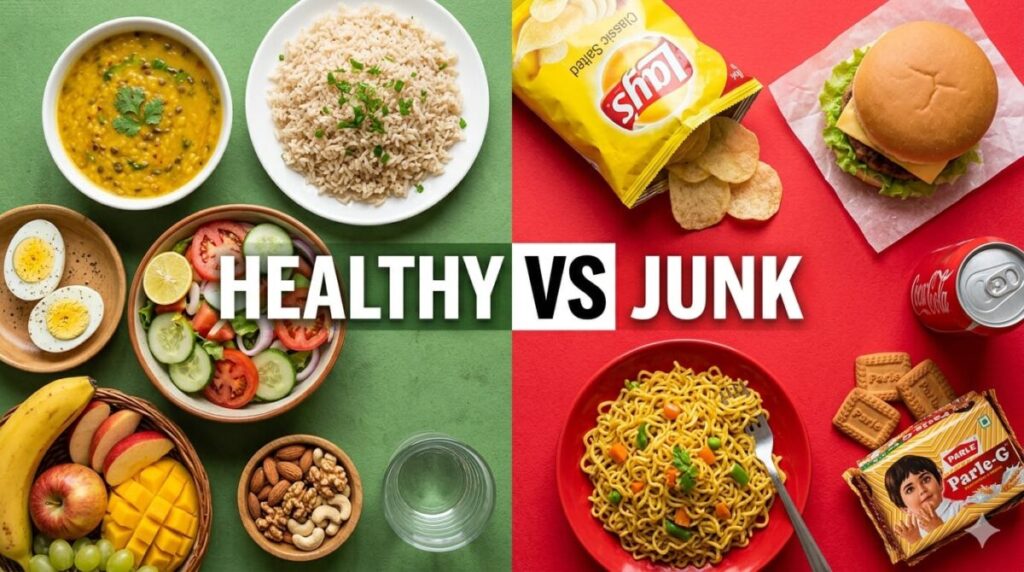
Let’s be real. When you’re running between lectures, submitting assignments at 2 AM, and surviving on a hostel mess budget — thinking about healthy food vs junk food feels like a luxury, not a priority.
But here’s the thing nobody tells you in class: what you eat directly determines how well your brain performs. The healthy food and junk food chart isn’t just nutrition theory — it’s one of the most practical tools you can use to improve your focus, energy, and exam scores without spending more money.
I’ve seen this personally. During my board exam prep, switching from chips-and-chai study sessions to eggs-and-oats mornings made a noticeable difference in how long I could focus without zoning out. This guide gives you everything I wish someone had told me back then.
1. What’s the Real Difference Between Healthy and Junk Food?
Before we get into the charts and comparisons, let’s quickly understand what separates these two food categories at a fundamental level.
What Is Healthy Food?
Healthy food is any food that provides your body with essential nutrients — vitamins, minerals, dietary fibre, protein, and healthy fats — in the right proportions. These foods support brain function, immunity, growth, and sustained energy throughout the day.
Key characteristics of healthy food:
- Rich in vitamins, minerals, and antioxidants
- Low in added sugar, refined flour, and trans fats
- High in fibre — keeps you full longer and aids digestion
- Provides slow-release energy (no crash after eating)
- Minimally processed or close to its natural form
What Is Junk Food?
Junk food is any food that is high in calories but low in nutritional value. It’s usually ultra-processed, loaded with refined sugar or salt, and designed by food companies to taste addictive — so you keep coming back for more.
Key characteristics of junk food:
- High in saturated fat, trans fat, and sodium
- Made with refined carbohydrates (maida, white sugar)
- Contains preservatives, artificial flavours, and colours
- Gives a short energy spike followed by a crash (the “energy dip”)
- Triggers cravings due to engineered taste profiles
💡 Important distinction: Not all “tasty” food is junk food — and not all healthy food has to be boring. The goal is to understand which foods support your brain and which ones slow you down, so you can make smarter choices without sacrificing enjoyment.
2. The Complete Healthy Food and Junk Food Chart
Below is a comprehensive healthy food and junk food chart covering every major food category. This chart is designed keeping Indian students in mind — so every example is something you’ll actually recognise from your canteen, hostel mess, or local market.
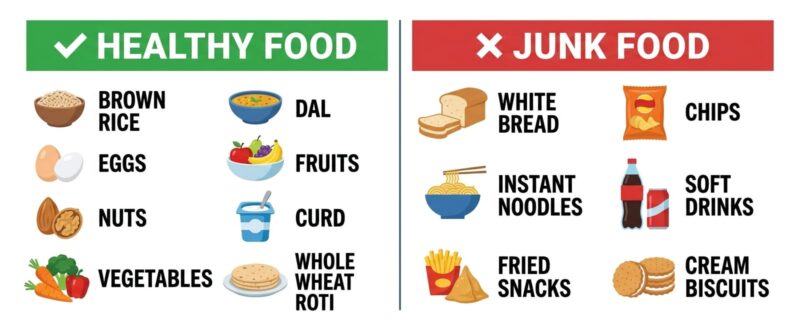
| Food Category | ✅ Healthy Food Options | ❌ Junk Food Options | Why It Matters for Students |
|---|---|---|---|
| Grains / Carbs | Brown rice, whole wheat roti, oats, jowar, bajra | White bread, maida paratha, noodles (instant), cream rolls | Whole grains provide slow-release energy. Refined grains spike blood sugar, causing crashes mid-study. |
| Protein Sources | Eggs, dal, rajma, chana, paneer (low-fat), curd, chicken | Sausages, salami, nuggets, fried chicken, packaged meat snacks | Protein is critical for neurotransmitter production — directly affecting mood and memory. |
| Snacks | Roasted chana, makhana, nuts (almonds, walnuts), fruit, poha | Chips, bhujia, fried namkeen, cream biscuits, wafers, cookies | Right snacks keep energy stable between study sessions. Wrong ones cause fatigue and brain fog. |
| Beverages | Water, coconut water, lassi (plain), green tea, lemon water | Cold drinks (Coke, Pepsi), packaged juices, energy drinks, excess chai/coffee | Dehydration reduces cognitive function by up to 15%. Cold drinks give a sugar rush then energy crash. |
| Fruits | Banana, apple, papaya, watermelon, orange, guava | Canned fruit in syrup, fruit-flavoured candies, packaged fruit juices (no fibre) | Whole fruits contain fibre that slows sugar absorption. Packaged juices spike blood glucose directly. |
| Dairy | Milk, curd, paneer (homemade), buttermilk (chaas) | Flavoured milk powders, ice cream, cheese spreads, cream-filled desserts | Calcium and Vitamin D from dairy support bone health and nerve function — crucial for growing students. |
| Fats / Oils | Ghee (limited), mustard oil, olive oil, coconut oil, nuts | Vanaspati, dalda, reused frying oil, margarine, cream-based sauces | Good fats are essential for brain cell membranes. Trans fats from reused oil are actively harmful to neural health. |
| Street Food | Boiled corn, roasted sweet potato, fresh coconut, sprout chaat | Samosa, bread pakoda, fried golgappa, kachori, vada pav (daily) | Occasional street food is fine. Daily fried street food overloads the liver and causes inflammation. |
| Sweets / Desserts | Dates, jaggery (gur), banana, fruit-based kheer (limited sugar) | Candy, chocolate bars (regular), mithai (daily), pastries, doughnuts | Natural sugars from dates and jaggery metabolise differently than refined sugar and do not spike insulin as sharply. |
| Ready-to-Eat | Boiled eggs, pre-soaked oats, curd with fruit, roasted makhana | Instant noodles (Maggi, Yippee), packaged popcorn, frozen meals, chips | Quick healthy options do exist. Preparation takes 5 minutes — the same as making instant noodles. |
3. Nutrient Comparison: What You’re Actually Eating
Let’s compare the actual nutritional data between a healthy food option and its junk food counterpart. The numbers below are per 100g and based on standard USDA and Indian nutritional databases.
| Nutrient | Brown Rice (cooked) | Instant Noodles (cooked) | Almonds | Potato Chips |
|---|---|---|---|---|
| Calories | 111 kcal | 138 kcal | 579 kcal (healthy fat) | 536 kcal (bad fat) |
| Fibre | 1.8 g | 0.9 g | 12.5 g | 4.4 g |
| Protein | 2.6 g | 3.5 g (low quality) | 21 g | 7 g |
| Sodium | 5 mg | 890 mg ⚠️ | 1 mg | 525 mg ⚠️ |
| Sugar | 0.4 g | 0.9 g | 4.4 g (natural) | 0.5 g (+ artificial) |
| Saturated Fat | 0.2 g | 2.3 g | 3.8 g (mono-unsaturated) | 5.3 g ⚠️ |
⚠️ Sodium Alert for Students: One packet of instant noodles alone contains nearly 890mg of sodium — that’s 40% of your recommended daily intake in one sitting. Excess sodium causes water retention, fatigue, and reduced mental alertness. Not great for a study session.
4. How Junk Food Silently Destroys Your Study Performance

Most students blame their inability to focus on distractions, social media, or “just not being a morning person.” But food — specifically junk food — plays a far bigger role than most people realise.
Here’s what actually happens in your brain and body when you rely on junk food during study hours:
🧠 The Blood Sugar Rollercoaster
When you eat chips, biscuits, or cold drinks, your blood sugar spikes rapidly. Your body releases a flood of insulin to bring it down — and this crash hits hard, usually within 60–90 minutes. Result? You feel sleepy, irritable, and unable to concentrate right when you need to focus the most.
This is the exact same reason students feel incredibly drowsy after lunch at college. A maida-heavy meal (white rice + curry with added sugar) causes a classic post-meal energy crash. If you struggle with this, check out our guide on how to avoid sleep while studying — it covers this specific issue in detail.
🧠 Memory and Hippocampal Function
Research published by Healthline and backed by multiple neuroscience studies shows that diets high in saturated fat and refined sugar can impair the hippocampus — the region of the brain responsible for storing and retrieving memories. For a student, this means what you eat today could literally affect how much of yesterday’s notes you can recall in tomorrow’s exam.
🧠 Gut-Brain Connection
Your gut and brain communicate directly through the vagus nerve. A diet high in processed foods disrupts gut bacteria, which in turn affects the production of serotonin — a neurotransmitter responsible for mood and learning motivation. In simple terms: eating badly makes you feel low, and feeling low makes studying feel impossible.
🧠 Chronic Inflammation
Trans fats found in vanaspati, reused frying oil, and packaged snacks promote low-grade inflammation in the body, including in the brain. Chronic neuroinflammation reduces neural plasticity — meaning your brain literally becomes worse at forming new connections and learning new information.
Real student example:Riya, a final-year engineering student from Pune, told us she used to eat chips and Bourbon biscuits during her late-night study sessions. After switching to roasted makhana and a glass of warm milk, her study sessions extended from 2 hours to over 4 hours without feeling mentally drained. The food change was the only variable she changed.
5. Brain Foods That Actually Help You Study Better
According to the Harvard T.H. Chan School of Public Health, certain foods have direct cognitive benefits. Here are the top brain-supporting foods — all affordable and available in India:
| Brain Food | Key Nutrient | Cognitive Benefit | Approx. Cost in India |
|---|---|---|---|
| 🥚 Eggs | Choline, B12, Protein | Improves memory formation and recall speed | ₹6–8 per egg |
| 🫐 Blueberries / Jamun | Antioxidants, Flavonoids | Reduces oxidative stress; improves long-term memory | ₹30–60 (seasonal) |
| 🥜 Walnuts | Omega-3 fatty acids | Supports neuron health, reduces brain inflammation | ₹120–150 per 100g |
| 🐟 Fish (Rohu, Surmai) | DHA, EPA (Omega-3) | Critical for brain structure and focus | ₹200–300 per kg |
| 🍌 Banana | Vitamin B6, Glucose | Quick natural energy; mood stabilisation | ₹5–10 per banana |
| 🌿 Green Tea | L-Theanine, Caffeine | Alert but calm focus — unlike coffee’s jittery effect | ₹200–400 per 100 bags |
| 🍵 Turmeric (Haldi) | Curcumin | Crosses blood-brain barrier; boosts BDNF (brain growth) | ₹10–20 per 100g |
| 🌾 Oats | Complex carbs, Iron, Zinc | Sustained mental energy for 3–4 hours of study | ₹80–120 per 500g |
6. Indian Student Food Guide: Healthy Swaps for Common Cravings
This section is where it gets practical. You don’t have to stop enjoying food — you just need smarter alternatives that fit your budget and taste preferences. Here’s the most useful part of any healthy vs junk food comparison for Indian students:
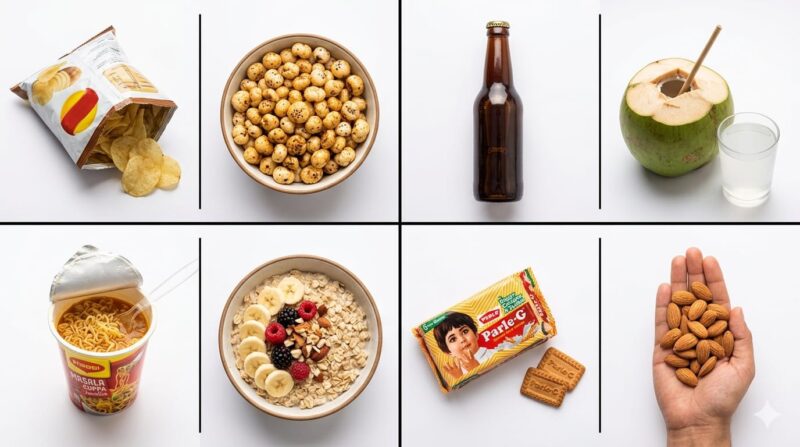
❌ Instead of: Maggi / Instant Noodles
Same prep time (~5 minutes), but poha gives you iron, fibre, and complex carbs instead of sodium and maida. You can make it in a hostel room with a small electric cooker.
❌ Instead of: Chips / Bhujia
Roasted fox nuts (makhana) are crunchy, satisfying, and packed with protein and calcium. A 30g serving has only 110 calories vs 160+ in chips. Buy them in bulk — they’re cheaper per serving.
❌ Instead of: Cold Drinks (Coke, Pepsi)
A glass of nimbu pani with a pinch of salt and honey costs ₹5–10 and gives you Vitamin C, electrolytes, and hydration. Cold drinks give you 40g of sugar with zero nutritional value.
❌ Instead of: Cream Biscuits at 11 PM
Late-night hunger is real. But biscuits spike your insulin before bed, disturbing sleep quality. Eggs or curd give protein that repairs muscle tissue overnight and keeps you full until morning.
❌ Instead of: Sweet Chai (4 cups daily)
4 cups of sugary chai = ~80–120g added sugar per day. Green tea gives you L-Theanine for calm focus plus antioxidants. Have 1–2 cups of chai, but make the rest herbal or green.
❌ Instead of: White Bread Sandwich
Whole wheat gives complex carbs + fibre. Peanut butter adds protein and healthy fat. This combo sustains focus for 2–3 hours. A whole wheat roti costs literally ₹2–4 from any dhaba.
7. What to Eat Before, During & After Exams
Timing matters as much as food choice. Eating the right things at the right time can genuinely give you an edge on exam day. Your daily routine for students should account for nutrition timing if you’re serious about performance.
| Timing | ✅ Best Foods to Eat | ❌ Foods to Avoid | Why |
|---|---|---|---|
| Night Before Exam | Dal chawal, khichdi, curd rice, warm milk with haldi | Biryani (heavy), fried food, excess coffee, sweets | Heavy meals disrupt sleep. Good sleep consolidates what you studied. Don’t experiment with new foods. |
| Exam Morning (2 hrs before) | Oats + banana, whole wheat toast + egg, poha with peanuts | Skipping breakfast, cold drinks, too much chai, greasy parathas | Glucose powers the brain. Skipping breakfast reduces concentration by 20% in the first 2 hours. |
| During Long Exam | Water, a small banana, dates, 5–6 almonds (if allowed) | Energy drinks, candy bars, chips | Hydration alone improves cognitive speed. Natural sugars from fruit prevent mid-exam fatigue. |
| After Exam | A proper balanced meal — protein + vegetables + carbs | “Treat yourself” binge of junk food | After mental exertion, your brain needs nutrients to recover. Binge eating post-exam is a real pattern that harms the next exam cycle. |
Maintaining a proper morning routine that includes a healthy breakfast is one of the highest-return habits you can build as a student. Most toppers I’ve spoken to cite breakfast as non-negotiable, even during exam season.
8. Expert Tips: Eating Healthy on a Student Budget
The biggest excuse students use for eating junk food is budget. But the truth is that junk food is often more expensive per unit of nutrition than healthy food. Here’s how to eat well for less:
1. Buy in Bulk at the Start of the Month
Oats, chana, dal, peanuts, and makhana bought in bulk cost 30–40% less than buying small packets. One 1kg bag of oats costs ₹120 and gives you 10+ breakfasts.
2. Eat Seasonal Fruits — Not Out-of-Season Imported Ones
Seasonal fruits in India are among the cheapest and most nutritious foods available. Guava in winter, watermelon in summer, papaya year-round. Never spend on fruit juice — whole fruit is always better.
3. Master the “Egg + Dal” Combo
This combination costs ₹25–35 per meal and gives you complete protein (all 9 essential amino acids), iron, fibre, and B vitamins. It’s the single best value-for-nutrition meal available to any Indian student.
4. Cook Once, Eat Twice
If you have a hostel room with an induction cooker, make a larger batch of dal, rajma, or sabzi at once. Refrigerate and eat over 2 days. This takes 30 minutes twice a week instead of buying expensive canteen food daily.
5. Track Spend on Junk Food for One Week
Most students are shocked when they add up what they spend on chips, biscuits, cold drinks, and chai daily. ₹50–80 per day on junk food = ₹1,500–2,400 per month. That same money could build an excellent healthy diet.
6. Use the WHO Healthy Plate Model
The WHO recommends filling half your plate with fruits and vegetables, a quarter with whole grains, and a quarter with protein. This model works perfectly with standard Indian food — no fancy ingredients needed.

9. Common Mistakes Students Make With Food (And How to Fix Them)
Understanding the healthy food and junk food chart is only half the battle. Knowing which mistakes to avoid is equally important. Here are the most common food-related errors that harm student performance:
- ❌ Skipping breakfast to save time
Your brain runs on glucose. After 7–8 hours of fasting overnight, skipping breakfast directly impairs memory and reaction time in the first half of the day. Even a banana and a glass of milk takes 3 minutes. No excuse is valid enough. - ❌ Relying on caffeine for focus (instead of sleep + food)4 cups of chai or strong coffee daily trains your brain to depend on stimulants for basic alertness. L-Theanine in green tea gives cleaner focus without the crash. Long-term excess caffeine also disrupts sleep — making tomorrow’s study session worse. See our post on managing exam stress which covers sleep hygiene in detail.
- ❌ Treating junk food as a “reward” after studyingThe habit of “I studied 3 hours so I deserve chips and a cold drink” seems harmless but becomes a conditioned pattern that increases junk food reliance over time. Choose better rewards — a walk, music, or a piece of dark chocolate.
- ❌ Not drinking enough water during study sessionsEven mild dehydration (1–2% body weight) reduces cognitive performance. Many students confuse thirst for hunger and reach for food instead of water, leading to excess calorie intake. Keep a 1-litre water bottle on your study desk always.
- ❌ Eating at irregular timesYour body has a circadian rhythm that governs digestion and metabolism. Eating at 2 AM, skipping lunch, and having a massive dinner disrupts hormonal balance. Consistent meal timing (within a 1–2 hour window each day) dramatically improves energy regulation.
- ❌ Thinking “healthy food” means expensive imported foodQuinoa, avocado, chia seeds — these are great but unnecessary. Dal, curd, eggs, seasonal sabzi, and whole wheat roti are scientifically proven to be just as nutritious, cost a fraction of the price, and are more bioavailable for the Indian gut microbiome.

10. Frequently Asked Questions
What is the difference between healthy food and junk food?
Which Indian foods are considered junk food?
Can students eat healthy food on a tight budget in India?
What should I eat before an exam?
How does junk food affect memory and concentration?
Conclusion: One Meal at a Time
You don’t have to overhaul your entire diet overnight. Honestly, that approach never works anyway.
Start with one swap this week. Replace your afternoon chips with roasted makhana. Swap one cold drink for nimbu pani. Eat a proper breakfast three days out of five. These small shifts compound quickly — and within 2–3 weeks, most students report noticeably better concentration and more consistent energy throughout the day.
The healthy food and junk food chart in this guide is your reference point — come back to it when you’re unsure what to eat, especially during high-pressure exam periods. Food is not separate from academic performance. It’s one of the core inputs that determines how well your brain functions every single day.
You’re already putting in the study hours. Don’t let poor food choices cancel that effort out.
📚 Build Your Full Student Success System
Great food habits work best when paired with the right study routine, productive study environment, and stress management strategies. Explore more student guides on Learnox:
📖 More From Learnox


Great article, thanks for sharing! For the viral World Cup browser game guide, try Sete a Zero: /. Sete a Zero