
 Soyeb Akhtar
Knowing how to negotiate salary with HR is one of the most valuable career skills you can develop — yet most Indian students and freshers skip it out of fear. This guide breaks down exactly how to prepare, what to say, what to avoid, and even gives you ready-to-use scripts so you walk into that HR conversation with full confidence.
You’ve cleared the interview rounds, impressed the panel, and the recruiter just called with a job offer. Exciting — until they mention the salary figure and it’s lower than you expected.

Right then, most Indian students go silent and say, “Okay, that’s fine.” And that one moment of hesitation can cost you thousands of rupees — every single month.
Learning how to negotiate salary with HR is not about being greedy or aggressive. It is about knowing your worth and communicating it clearly. According to a global survey by Fidelity Investments, 85% of people who negotiated their salary received at least some raise — yet fewer than 40% of Indians ever try.
Whether you are a college fresher attending your first placement, or a working professional eyeing a switch, this guide will show you exactly how to negotiate salary with HR in India — with confidence, data, and the right words.
1. Why Salary Negotiation Matters in India
There is a widespread myth in Indian workplaces: “The salary is fixed. HR won’t budge.” This is simply not true. HR professionals operate within a salary band — meaning there is always some room built into the budget. The initial offer is almost never the maximum they can pay.
Here is why this matters more than most students realise:
- Compound effect on future earnings: Your next salary hike is usually a percentage of your current salary. If your starting package is ₹4.5 LPA instead of ₹4 LPA, you are not just earning ₹50,000 more this year — you are compounding that gap over the next decade.
- It signals confidence: HR managers see negotiation as a positive sign. It shows you understand your value and can advocate for yourself — a trait every team needs.
- It covers more than just salary: You can negotiate joining bonuses, work-from-home days, learning budgets, performance review timelines, and more.
- Companies expect it: Most organisations build a 5–15% buffer into their initial offers, knowing candidates will push back.
2. How to Prepare Before Talking to HR
Walking into a salary discussion without preparation is like appearing for a JEE exam without studying. The preparation phase is where the negotiation is actually won or lost.

Research Industry Salary Benchmarks
Before you name a number, you need to know the market. Use these sources to get accurate salary data for your role, experience level, and city:
- AmbitionBox — Best for Indian company-specific salary data.
- Glassdoor India — Great for overall ranges and employee reviews.
- LinkedIn Salary Insights — Useful for role-specific data by city.
- Ask seniors and alumni in your field — real conversations beat any website.
Know Your Non-Negotiables vs. Nice-to-Haves
Before the HR conversation, write down two things:
- Your target number: The salary you genuinely want, based on research.
- Your walk-away number: The minimum below which the job is simply not worth it for you financially.
This mental clarity prevents you from accepting something you’ll regret later.
List Your Value Points
HR will ask you why you deserve more. Have answers ready. Think about:
- Relevant internships, projects, or certifications.
- Specific skills mentioned in the job description that you already have.
- Measurable results from past work (e.g., “built a tool that reduced reporting time by 40%”).
- Higher academic scores or distinctions if you are a fresher.
For more on how to build a productive student career foundation, check out our guide on the best entry-level jobs for freshers in India.
3. How to Negotiate Salary With HR: Step-by-Step
Here is a structured, step-by-step approach for how to negotiate with HR for salary without coming across as demanding or unprofessional.

1. Wait for the Right Moment
Do not bring up salary first. Let HR mention the compensation. The right moment to negotiate is after you have the offer in hand — that is when you have the most leverage, because they have already chosen you.
2. Express Enthusiasm First
Start the negotiation by showing genuine interest in the role. “I’m very excited about this opportunity and about joining the team.” This keeps the tone positive before you bring up the salary discussion.
3. Present Your Research, Not Just a Number
Say something like: “Based on my research on AmbitionBox and Glassdoor, the market range for this role in [city] is between ₹X and ₹Y. Could we explore moving toward the higher end of that range?” This grounds your ask in data, not emotion.
4. Back It With Your Value
Immediately follow your number with your value points. “I also bring [specific skill / certification / result], which I believe directly supports [specific job requirement].” This connects your ask to what matters to them.
5. Stay Silent After Stating Your Number
This is one of the hardest parts. After you say your expected salary, stop talking. Silence creates natural pressure. Many candidates cave and lower their own ask before HR even responds. Don’t.
6. Be Open to the Full Package
If HR says the base salary is fixed, explore other options — a joining bonus, an earlier performance review date, additional leave, remote work flexibility, or a professional development budget.
7. Get It in Writing
Once you reach an agreement, politely ask for the revised offer letter to reflect all agreed terms before you formally accept. Verbal agreements in hiring conversations have a way of being “forgotten.”
4. What to Say — Real Scripts & Dialogues
Theory is fine — real words are better. Here are actual scripts you can use when you negotiate salary with HR, tailored for Indian candidates.
Script 1: Basic Salary Counter-Offer
Script 2: When HR Says “That’s Our Best Offer”
Script 3: When HR Asks “What Is Your Expected Salary?”
5. How to Negotiate Salary Over Email
Sometimes the offer arrives by email and the HR team expects your response the same way. Here is a clean template that is professional, confident, and leaves room for dialogue.
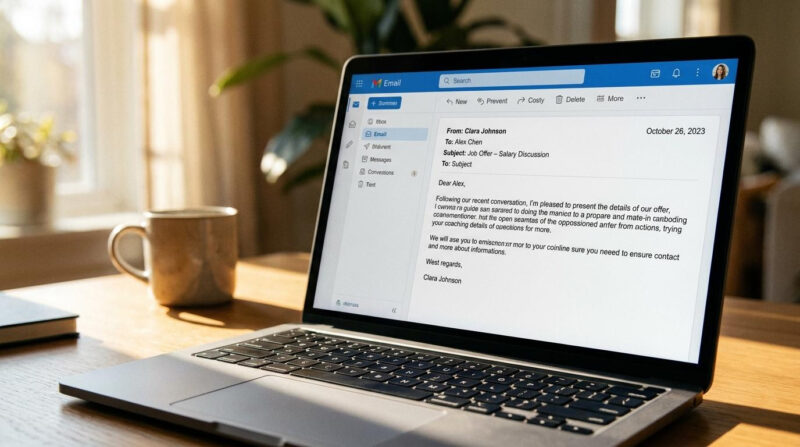
Subject: Re: Job Offer — [Your Name] | [Position Name]
Dear [HR Manager’s Name],
Thank you so much for the offer letter for the [Position] role at [Company Name]. I’m genuinely excited about the opportunity and the work the team is doing.
After reviewing the offer and conducting research on current market standards — including data from AmbitionBox and LinkedIn Salary Insights for this role in [city] — I wanted to discuss the compensation component.
The offered CTC of ₹[X] LPA is slightly below the market range of ₹[Y]–₹[Z] LPA for comparable roles and experience levels. Given my background in [mention 1–2 specific skills or certifications], I was hoping we could explore a revised offer closer to ₹[your target] LPA.
I’m very eager to join the team and contribute from day one. I’m confident we can find a mutually agreeable number. Please let me know if we could schedule a brief call to discuss this further.
Warm regards,
[Your Name]
[Phone Number]
6. Common Mistakes to Avoid When Negotiating Salary With HR
Knowing what not to do is just as important as knowing the right moves. These are the most common errors candidates make during salary discussions in India.
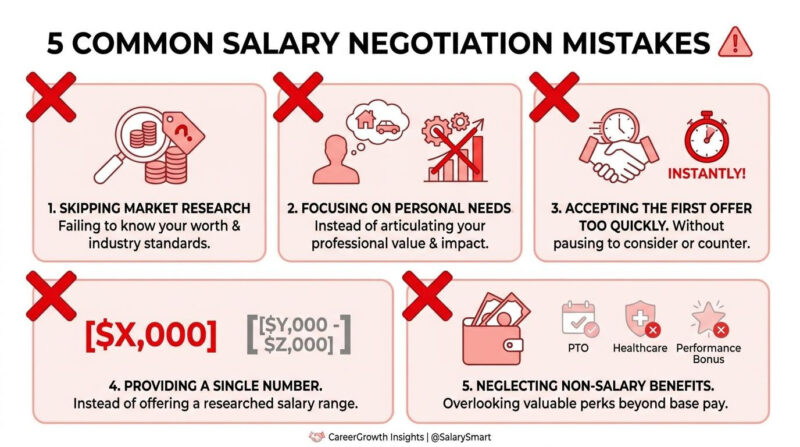
| ❌ Common Mistake | ✅ What to Do Instead |
|---|---|
| Giving a single number immediately when asked for salary expectations | Give a well-researched range with the lower end at your target number |
| Using personal reasons (“I have rent and EMIs”) to justify salary | Base your ask on market data and your professional value — keep it business-focused |
| Accepting the first offer on the spot out of excitement or fear | Say “Thank you — could I have 24 hours to review the full offer?” — it’s completely normal |
| Negotiating before you have a written offer in hand | Wait for the formal offer before opening the salary discussion |
| Forgetting to factor in non-salary components (HRA, variables, benefits) | Always compare full CTC structures, not just base pay numbers |
| Revealing your current or previous salary too early | Politely redirect: “I’d rather discuss my expectations based on market benchmarks” |
| Burning bridges by being aggressive or issuing ultimatums | Keep every exchange respectful, collaborative, and professional — always |
7. Expert Tips That Actually Work

🎯 Expert Tips from HR Professionals and Career Coaches
- Anchor high, but stay reasonable. Studies in negotiation consistently show that the first number mentioned anchors the conversation. Always let your initial ask be slightly higher than your actual target, so there is room to “compromise” at exactly where you wanted to land.
- Use “we” language. Instead of “I want more,” try “How can we make this work for both sides?” It sounds collaborative, not confrontational, and HR responds much better to it.
- Ask about the review cycle early. Even if the initial salary is lower than you hoped, a 6-month performance review instead of a 12-month one can get you to your target number faster than months of negotiation.
- Never negotiate on the phone. If HR calls with the offer, it’s okay to say “I’m thrilled about the offer. Could I get the details in writing and respond within 24 hours?” This gives you time to think without pressure.
- Practice out loud — literally. Most Indian freshers feel awkward saying money-related sentences. Rehearse your negotiation script with a friend or in front of a mirror until it feels natural. Preparation kills nervousness.
- Know when to stop. If HR has truly hit their ceiling and you have explored all alternatives, decide whether the role’s other value — growth, brand, learning — is worth accepting. Not every negotiation ends with a salary win, but the experience and relationship remain valuable.
Good negotiation also depends on managing your time and energy wisely — especially during placement season. Our guide on time management tips for Indian students can help you stay sharp through the process.
If you are preparing for placements while juggling multiple deadlines, check out our curated list of the best time management tools for students in 2026 to stay organised.
8. Frequently Asked Questions
Can a fresher negotiate salary with HR in India?
What is the best time to negotiate salary with HR?
How much salary hike can I ask for in India?
What should I say when HR asks for my salary expectations?
Will negotiating salary cause HR to reject my offer?
9. Conclusion
Knowing how to negotiate salary with HR is not a skill reserved for MBAs or experienced professionals. It’s a conversation any prepared, confident person can handle — including you.
The formula is simple: research the market, know your value, time the conversation correctly, stay professional, and back every ask with data. Whether you are negotiating your first campus placement package or a mid-career switch, the principles remain the same.
Every ₹50,000 you negotiate today is worth significantly more by the time you factor in raises, bonuses, and compounding over your career. So take a deep breath, prepare your script, and make the ask. The worst they can say is no — and most of the time, they won’t.
Explore more career and productivity resources on Learnox’s Money & Career section — built specifically for Indian students who want to earn smarter and grow faster.
🎓 Ready to Start Your Career Journey?
Explore more free guides on cracking interviews, managing your time, and building the life you want — all made for Indian students.